
Selection Debt: On Doing Things That Don't Matter

AI has made execution extremely cheap. What’s expensive is committing to the wrong thing. I’ve been thinking of this as Selection Debt: the cost of moving quickly on a poor foundational premise.
I started drawing portraits when I was young, and at age fifteen, I sketched a picture of my at-the-time girlfriend as a birthday gift.
I spent a good amount of time outlining the positioning of her features. Then, eager to see a masterpiece emerge, I dove in.
But there’s an interesting thing about drawing faces. If the angle of the nose is slightly off, the spacing between the eyes too wide, or the hairline a little too elevated, the person becomes unrecognizable.
After labouring over each strand of hair and dotting the black of her pupils with a white-tipped pen (always one of my favourite parts), I stood back from the details.
It turned out I was not drawing my girlfriend. Instead, I’d created an older and less attractive sibling.
Five hours of careful work couldn’t compensate for a flawed outline. The problem wasn't execution; it was selection.
Selection Debt
Drawing portraits was one of my first encounters with selection debt. At a micro level, it costs us hours or days. At a macro level, it robs us of years.
Selection debt shows up in every area of my life:
Spending weeks writing an article when the underlying topic wasn’t that interesting.
Investing in customers who are just not a good fit for what we’re building.
Hiring people who are 7/10s, investing months in them, only to inevitably let them go.
Using AI to build automations for low-value workflows.
The value of slowing down in the right moments is nothing new. Wiser souls have applied a “measure twice, cut once” mindset for many years.
But recently, as AI has made it ridiculously easy to cut, I’ve been noticing just how hard it can be to really take the time to measure.
The increasingly seductive pull of creation
I recently had an idea for a workflow to support new hire onboarding. Knowing that I could rapidly produce a real prototype with Claude, I jumped into execution mode.
I bypassed the mundane and unsexy stages of planning and feedback gathering, seduced instead by self-constructing UIs that would bend to my every command.
The v1 itself took only a few hours to build. But it was the subsequent days and nights where the real cost accrued. I got sucked into micro-refinements and the irresistible allure of UX touchups, kidding myself that with enough tweaks, something of high value would emerge.
I’m pretty sure I’ll never use that workflow (which in the end still consumed some 10+ hours).
With execution becoming so cheap and iteration loops highly seductive, it’s easier than ever to waste time dressing up ugly ideas in a pretty exterior.
How many people are building things to automate work they were never previously doing?
The discomfort of standing still for too long
If the first force generating selection debt is the allure of creation, the second is the repulsion from standing still.
In New York, I’ll occasionally attempt a walking meditation around my block. But after a few awkward overtakes by strangers who are trying to get somewhere at the usual NYC pace, I’ll often cave—speeding up just a little to avoid the discomfort of standing out.
Unless you’ve been burnt enough times by selection debt, the cost of inaction is usually more apparent than the upside of slowing down.
A friend of mine is a serial founder who, after selling one of his companies to Google, became extremely intentional about the next thing he’d spend time on. This period ended up lasting seven years.
I find that extremely inspirational and totally unimaginable. But seven years sounds excessive until you compare it to spending seven years on the wrong thing.
In that time, he turned down many enticing projects, and now he’s finally building his next thing. Full of energy, capitalizing on market timing, and deeply aligned with his new mission.
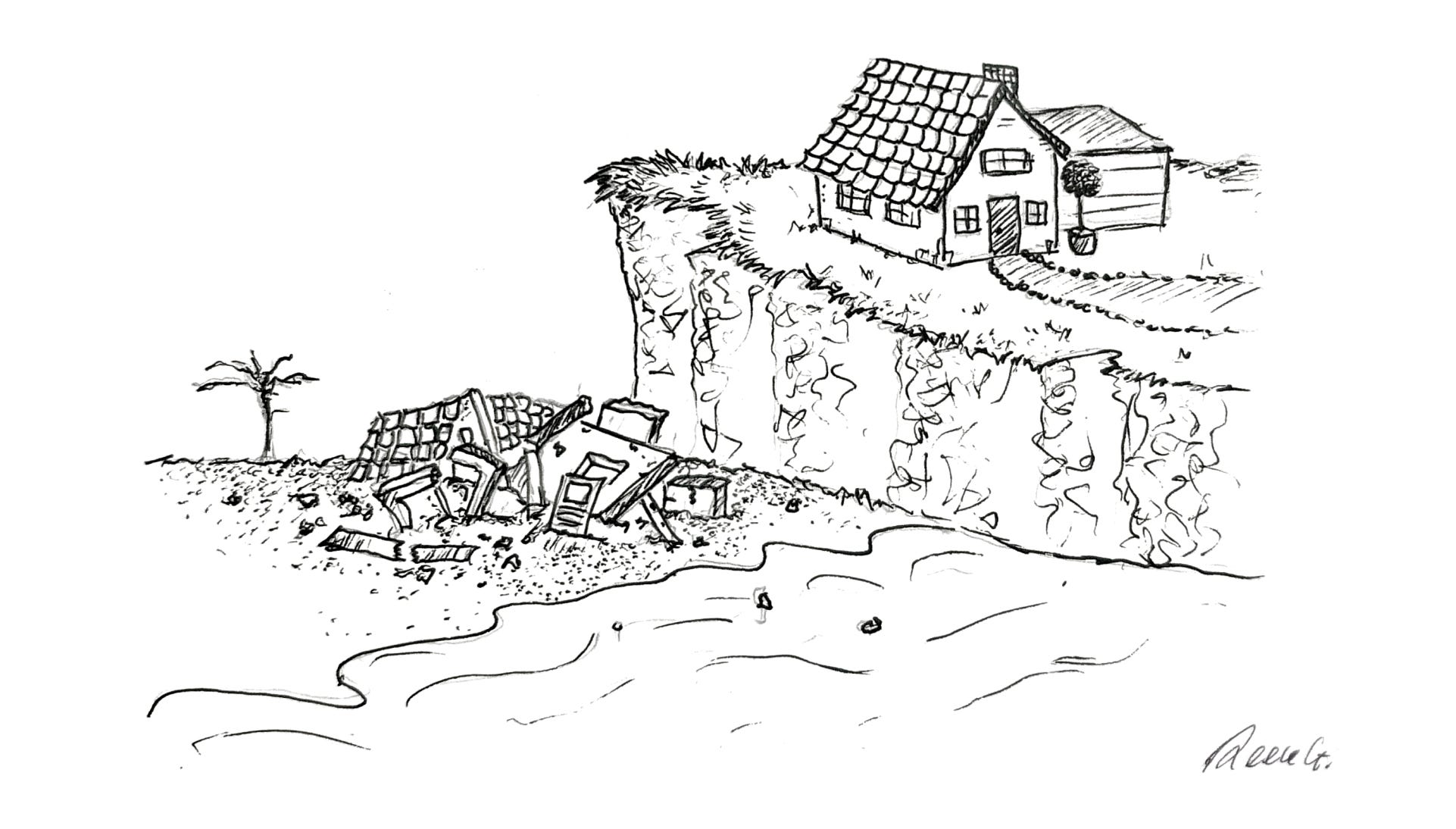
“The wise man built his house upon the hill.”
Avoiding Selection Debt
As Derek Sivers puts it, you have to say no to many things to leave space for the one or two HELL YESes. A few things are helping me to do that.
Let the inspiration simmer
Last summer, I had an idea for a surf-tech side project. As I began exploring the various ways to capture high-quality video footage and the real-time feedback you could provide a surfer, I caught myself. Is this temporary excitement, or something deeper? Knowing my tendency to get giddy about a new idea, I forced myself to hold off for one month.
Inspiration is perishable, which I always thought was a warning to act quickly. I now see it as a useful tool.
A common thread across the projects I’ve invested heavily in—building a tech company, writing, creating a founder community & fund—is that my inspiration was never fleeting. The pull towards these things had been in the background for months, only growing stronger.
If an idea keeps coming back, then it’s worth listening to. The surf-tech dream did not survive the simmer.
Defining direction in moments of clarity
Each year since 2020, I’ve written a document called “Values, Aspirations and Thinking”. It’s a collection of principles I want to live by and a summary of what’s important to me in the coming 12 months.
I always write this around January 3rd, tucked away in a cabin in the Polish mountains with some of my closest friends. In this environment, I feel inspired, highly conscious, and living from a place of love.
The heightened clarity I experience over these few days becomes a guide for the rest of the year.
Without it, I can’t trust that my judgement will remain clear in moments of busyness, FOMO and temptation.
Let AI remove the noise, not contribute to it
Increasingly, I don’t want AI to help me execute faster. I want it to help me choose better.
Before helping me with a task, I’ve experimented with asking Claude to challenge whether the task deserves my attention in the first place.
“Claude, I’m trying to be really smart about where I’m spending my time right now. Before you answer my request, given everything you know about me and my life objectives, challenge me on whether this is actually the best thing for me to be spending time on right now.”
While it did add some friction, it proved insightful.
On Saturday, I was trying to figure out which article to spend time writing. The exercise helped me see that I'd spent an entire week absorbed in a state of doing. Recalling that it’s only by stepping briefly away from my projects that I’ll have anything meaningful to contribute, I spent the rest of the day free from both my laptop and phone.
I’m still catching myself five hours into the wrong portrait.
Of course, mistakes are part of learning. There is great merit in choosing projects where the skills you learn and relationships you build matter more than the project outcome itself.
But in a world that is moving faster and faster, being comfortable slowing down at the right moments will become a superpower.
For better strategic outcomes. And for the soul.